The Invisible Menu - Part 5: Building a Debris-Aware Workflow
Part 5 of the Invisible Menu blog series.
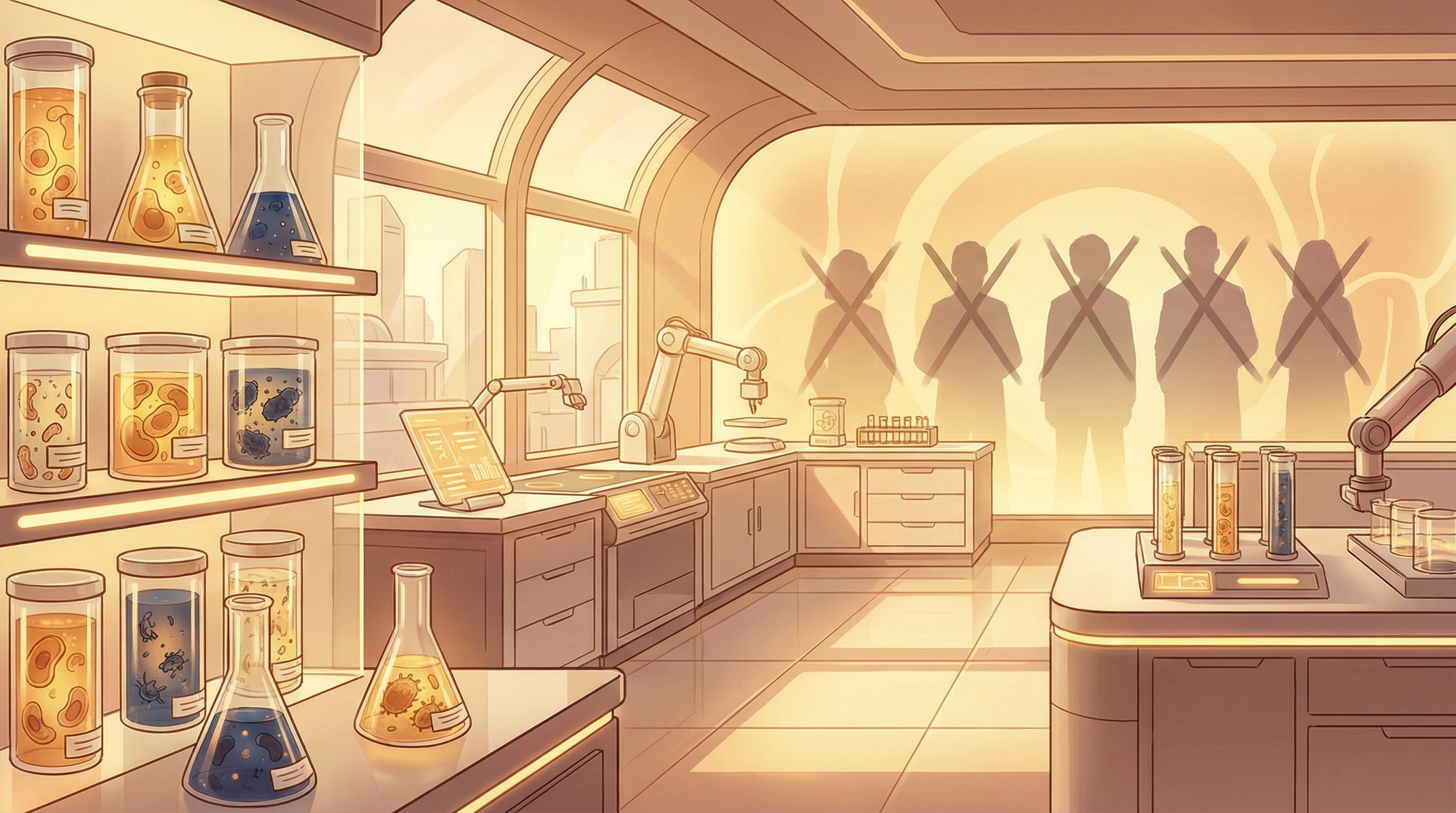
The kitchen is clean. Every ingredient is known. Every contaminant is quantified. Every decision is informed.
This is what sample QC looks like when you can finally read the menu.
For four episodes, we journeyed through the invisible menu—the hidden ingredients corrupting research laboratories worldwide. We met the villains: The Invisible Contaminant, The Ambient RNA Soup, The Segmentation Failure, The Compounding Error, The QC Blind Spot. We discovered why algorithms can never defeat them. We learned the physics that can. We revealed the recipe.
Now, we visit the laboratory that implemented the solution. The clean kitchen where five villains met their match.
The Transformation
Remember Dr. Sarah Chen's genomics core facility? Months of inconsistent 10x runs. Image counters reporting perfect counts while 30% debris contaminated every sample. Wasted chips. Corrupted libraries. Bioinformatics nightmares.
That laboratory transformed.
Today, every sample passes through a physics-based QC checkpoint before loading. The Coulter principle measures actual particle size. The size distribution histogram reveals complete population composition. Preset gates enforce standardized thresholds. Go/no-go decisions happen before resource commitment—not after.
The Results
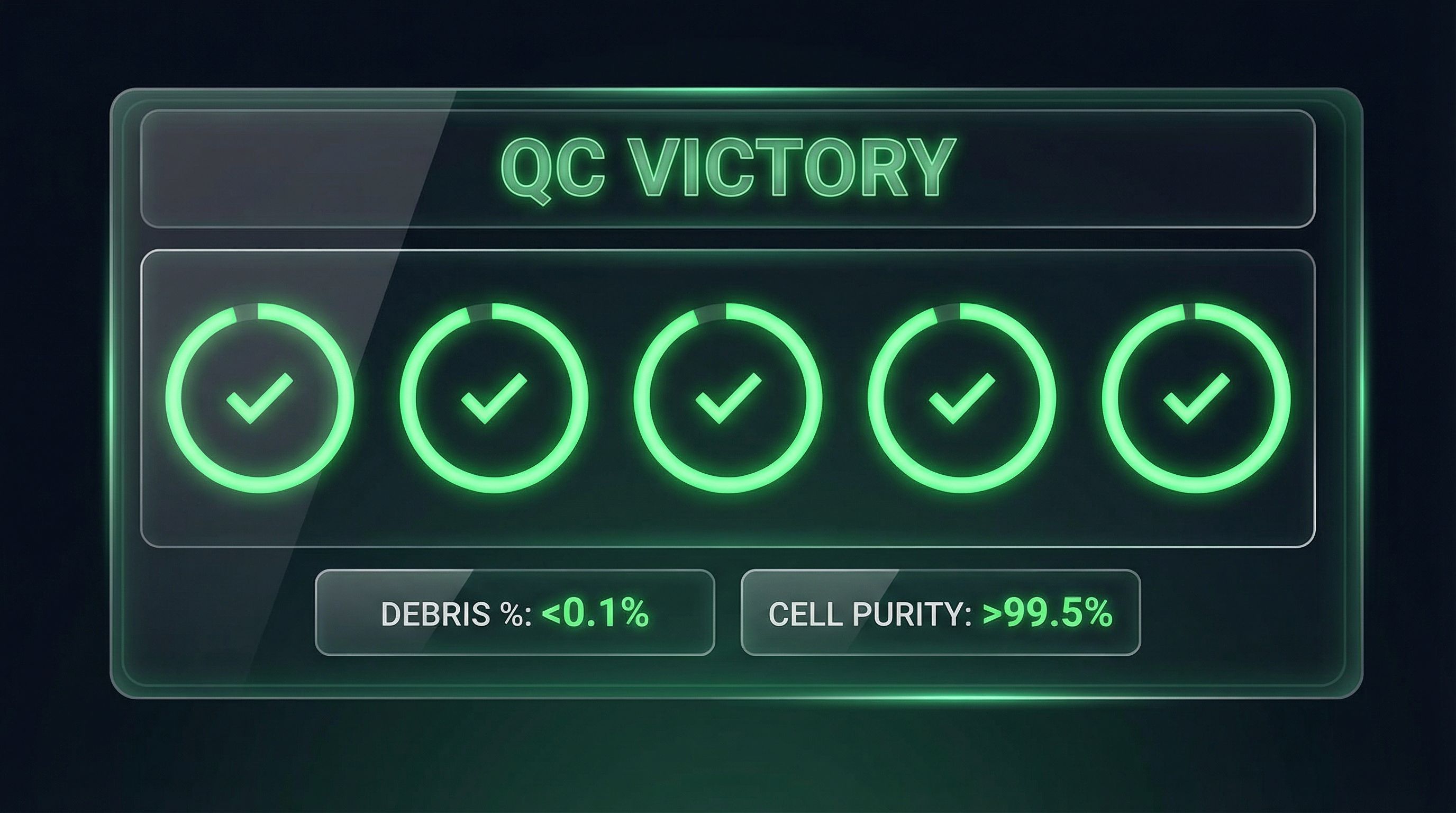
Sample failures dropped by 60%. Chip waste decreased dramatically. Sequencing data quality improved measurably. Bioinformatics teams reported cleaner starting material. The invisible menu became readable—and the kitchen stayed clean.
Five Villains, Five Defeats
Let's revisit each villain and celebrate their defeat:
The Invisible Contaminant — Exposed
Debris that image counters excluded but never quantified? Physics-based detection sees every particle. Nothing hides. Contamination percentage is calculated instantly, visible on every histogram. The invisible became visible.
The Ambient RNA Soup — Prevented
Cell-free material threatening single-cell libraries? Now detected before loading. Samples with excessive debris get cleaned up, not committed to expensive chips. The soup never makes it into the library prep.
The Segmentation Failure — Bypassed
AI algorithms failing on unfamiliar debris patterns? Physics doesn't guess. The Coulter principle measures actual volume—no interpretation, no training data required, no algorithm to confuse. Segmentation becomes irrelevant when you measure instead of estimate.
The Compounding Error — Eliminated
Debris miscounts corrupting viability calculations? When debris is physically separated from cells based on size, the calculation starts clean. No compounding errors because the foundation is measurement, not guesswork.
The QC Blind Spot — Filled
No standardized debris thresholds in workflows? Preset gates now enforce objective criteria. Every user, every sample, every timepoint—measured against the same standards. The blind spot becomes a checkpoint.
The Clean Kitchen Standard
What does a laboratory look like when it finally reads the full menu?
- Every sample is characterized—not just counted, but fully profiled for debris content
- Decisions are evidence-based—proceed, clean up, or document based on objective measurement
- Resources are protected—expensive chips and reagents reserved for qualified samples
- Data quality is assured—contamination prevented, not cleaned up computationally
- Standards are enforced—reproducible QC across users, experiments, and timepoints
This is the clean kitchen. Not because contamination disappeared—it never does. But because contamination is now visible, quantified, and controlled.
From Blind Trust to Evidence-Based QC
The journey we've taken through The Invisible Menu represents a fundamental shift in how laboratories approach sample quality:
Before: Trust the count. Assume sample quality. Hope for the best. Troubleshoot when things fail.
After: Verify composition. Quantify contamination. Make informed decisions. Prevent failures before they happen.
Physics-based impedance detection—the Coulter principle applied to research sample QC—makes this transformation possible. Not by replacing one counting method with another. By being something image-based approaches aren't: a complete sample intelligence platform.
The Complete Solution
Direct size measurement through impedance detection. Complete population visualization in size distribution histograms. Debris percentage quantification at every checkpoint. Preset gates for standardized thresholds. Go/no-go decision capability before resource commitment. Five ingredients. Five villains defeated. One clean kitchen.
Your Menu Awaits
Every laboratory has an invisible menu. Hidden ingredients contaminate samples. Villains corrupt data. Resources get wasted on samples that should have been cleaned up first.
The question isn't whether these problems exist—they do, in every laboratory that relies on image-based counting alone. The question is whether you'll continue ordering blind, or finally demand to read the full ingredient list.
Physics-based debris quantification isn't just an alternative to image counting. It's the missing QC checkpoint that transforms sample preparation from guesswork to measurement. From hope to confidence. From invisible menus to clean kitchens.
The recipe is proven. The villains are defeated. The kitchen can be clean.
It's time to read your menu.
Ready to Read Your Menu?
Discover how physics-based debris quantification can transform your sample QC workflow. See what others miss.